Buy 3 & SAVE more than 4000 PKR + Free delivery + Free Hanging kit
5 Benefits of Arabic Calligraphy Wall Art Prints

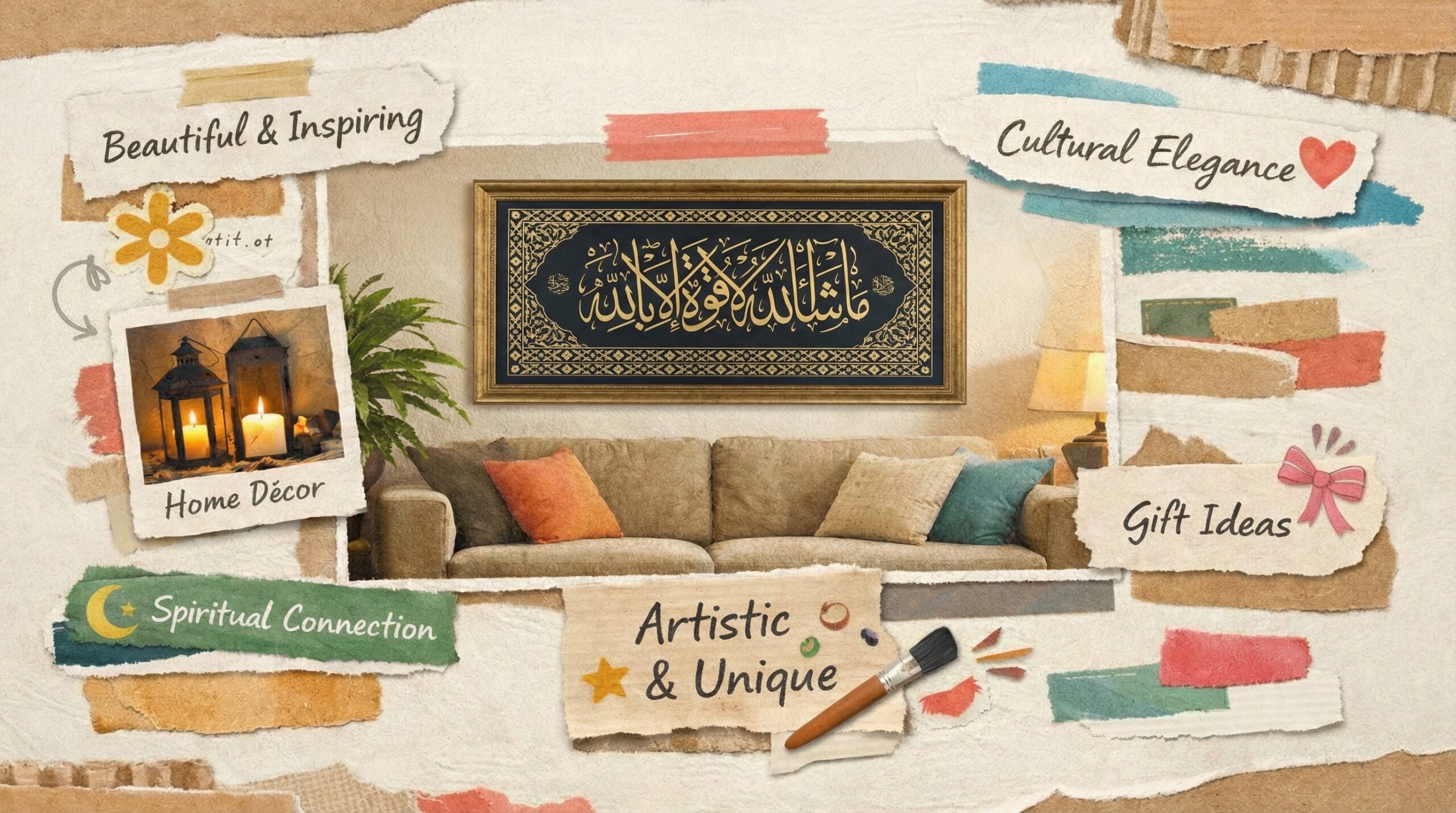
You've probably stood in the middle of your living room staring at a large, blank wall that feels more like a gap than a part of your home. You want something sophisticated, not the mass-produced abstract prints found in every big-box store. You want art that actually says something, both literally and visually.
Arabic calligraphy wall art can anchor a room the way a well-chosen sofa anchors a living space. A single script piece adds visual weight and texture, and the look changes entirely with material: textured canvas feels like fine art, metal gives a sculptural edge, and acrylic offers crisp shine. Beyond appearance, it brings quiet meaning into daily life, verses like Ayatul Kursi or phrases like Bismillah act as steady, dignified reminders in a living room, entryway, or prayer corner in a way abstract art rarely does.
It's also genuinely versatile. Matte metal suits minimalist lofts, warm wood complements rustic interiors, and soft canvas fits Scandinavian or contemporary schemes. Below are five clear benefits of adding Arabic calligraphy wall art to your home, plus practical tips on material, sizing, and buying so your next piece feels intentional rather than accidental.
Quick Summary
Use this as a checklist while you compare material, size, and phrase:
- Anchor the room: one well-scaled, textured piece creates an immediate focal point.
- Material and finish: canvas gives texture and a gallery look, metal adds a sculptural edge, acrylic offers clean shine.
- Phrase and intent: match short devotional phrases or Quranic verses to the room's purpose.
- Size and placement: artwork width should equal 60–75% of the furniture beneath it; center it 57–60 inches from the floor.
- Buy, care, and budget: small prints are affordable, framed canvases are mid-range, and commissioned pieces cost more; dust gently and choose fade-resistant inks.
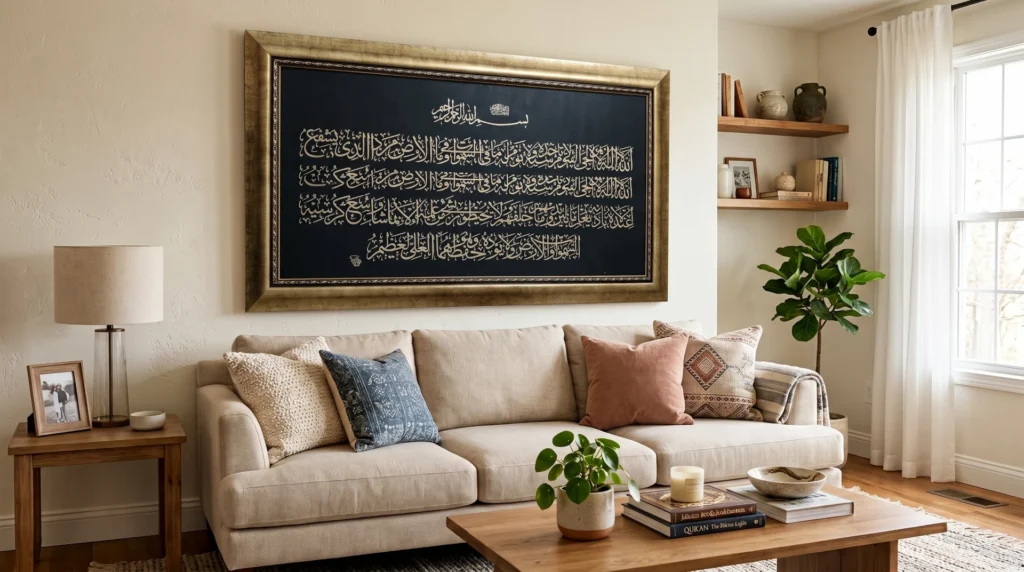
Table of Contents
1. Five Benefits of Arabic Calligraphy Wall Art
Calligraphy performs well across settings and budgets, which is exactly why it works for homeowners, interior designers, office managers, collectors, and gift buyers alike.
- Instant focal point: a well-scaled piece anchors a wall and organizes the room without adding clutter.
- Meaningful presence: devotional lines or uplifting words shape a space's atmosphere in a way abstract art can't.
- Material versatility: canvas, wood, metal, acrylic, and mixed media each bring different character, suiting both minimalist and traditional interiors.
- Practical flexibility: canvas prints are lightweight and affordable for testing scale; metal and mosaic pieces offer durability for higher-traffic or formal spaces.
- Conversation and identity: readable phrases or translated captions invite cultural connection and make shared spaces feel inclusive.
Takeaway: Match benefit to need, canvas for test runs or rental homes, wood or metal for long-term installations, and mosaics or custom commissions for permanent statements.
2. Materials and Finishes: Pick Based on Budget and Use
Material shapes appearance, care needs, and cost, so decide where the piece will hang before choosing a finish.
Canvas adds visible texture and a gallery feel without a gallery price. A natural-wood frame makes it read like an original painting, and fade-resistant inks with a tight stretch extend its life. Great for living rooms, bedrooms, and entryways.
Wood and carved panels bring tactile, artisanal warmth. Solid wood or plywood with hand-carved or laser-cut detail suits traditional and rustic interiors. just keep it dry and dust with a soft cloth to prevent warping.
Metal and acrylic add reflection and durability for modern interiors. Brushed or powder-coated metal is bold and long-lasting; acrylic gives high gloss without the fragility of glass. Both need stronger fixings but hold up well in entryways and hallways
Mosaic and mixed-media works are architectural statements (usually custom, pricier, and best suited to permanent installations).
Takeaway: Once material is settled, pick a phrase and script that suit the room's purpose and the people who'll see it daily.
For a clean, contemporary option that pairs script with geometric composition, the Modern Minimalist Circle and Arches Wall Art is a good example of calligraphy reading as both modern and timeless.
3. Phrases, Scripts, and What to Pick for the Room
Words set the tone as much as form, so choose phrase and script early.
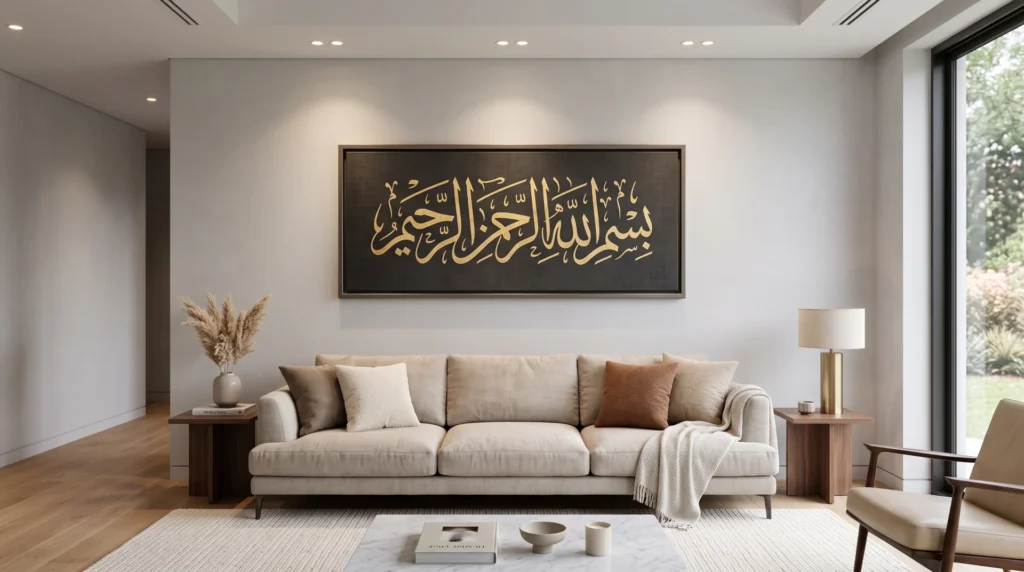
- Bismillah: common over doorways and in kitchens as a gentle daily invocation.
- Ayatul Kursi: often placed in living rooms or entryways for reflection.
- Surah Al-Ikhlas: compact, frequently framed for living spaces or prayer corners.
- SubhanAllah, Sabr, Tawakkul: single words or short phrases suited to studies, hallways, or casual spaces.
Script choice sets mood too. Kufic reads geometric and modern; Thuluth feels formal and grand, suitable above a mantel or in an entry; Naskh is clear and readable for studies or children's rooms; Diwani adds ornamental flourish as an accent. Many decorators now combine traditional scripts with modern compositions (single-word prints, bilingual layouts, or typographic pieces that read as art first).
Takeaway: Choose a phrase that resonates with something personal, it turns the wall into more than decoration.
4. Size, Placement, and Color: Make It Look Deliberate
Scale and placement decide whether a piece reads as intentional. Match scale to the space. Artwork width should equal 60–75% of the furniture width beneath it. The farther the seating, the bolder the scale needs to be. Set the eye line. Center the piece around 57–60 inches from the floor, adjusting higher in stairwells or lower in cozy bedrooms. Leave a gap. 6–12 inches between the top of the furniture and the frame keeps the composition tight.
| Size | Dimensions | Best For |
|---|---|---|
| Small | 8 X 12 to 16 X 20 inches | Nooks or narrow walls |
| Medium | 18 X 24 to 24 X 36 inches | Entries or side walls |
| Large | 30 X 40 inches and above | Sofas or large mantels |
In a prayer corner, keep calligraphy centered and slightly elevated, and protect the piece from moisture and direct sunlight. Choose contrast so strokes read from a distance (light script on a dark wall or dark script on a light wall) and use metallic accents sparingly.
5. Where to Buy, Price Ranges, and Commissioning a Custom Piece
- Small prints on canvas or paper are the most affordable option.
- Mid-range pieces, framed canvas prints or acrylic panels commonly fall between Rs. 4000 to Rs. 15000 depending on the size and framing type.
- Premium work like hand-made, original artworks usually priced higher depending on materials used, size and framing.
Marketplaces like Etsy offer variety and budget options, specialist galleries show curated or higher-end work, and boutique makers provide hands-on custom service. Royale Canvas offers gallery-quality textured canvas prints framed in natural wood, ready to hang and delivered across Pakistan, including Karachi, Lahore, and Islamabad (with secure packaging and fade-resistant inks).
If you commission a piece, request sample work and a digital mockup, confirm the exact script and translation, and ask about material specifications, timeline, return policy, and revision limits. Plan for two to eight weeks depending on complexity and shipping.
Takeaway: Always review close-up photos and customer reviews before you purchase, and get shipping and packaging details in writing for heavier pieces.
6. Care, Installation, and Display Etiquette
Care:
- Dust canvas weekly with a soft brush or dry microfiber cloth.
- Spot-clean framed canvases with a damp cloth and mild soap.
- Wipe metal with a microfiber cloth and mild cleaner, and avoid abrasive chemicals on acrylic or glass.
Installation:
- Use wall anchors rated for the piece's weight.
- Prefer a French cleat for heavy metal panels since it distributes load evenly.
- Use a stud finder before drilling large works, and consider a professional installer for very heavy or high-mounted pieces.
Respectful display:
- Avoid placing verses in bathrooms or directly on the floor.
- If you display Quranic lines in shared or public spaces, add a translation or short description, and consult a local imam or trusted religious source when in doubt.
Pre-purchase checklist:
- Confirm the exact phrase and an accurate translation.
- Choose the right material for the room and traffic level.
- Measure wall space and nearby furniture for scale.
- Review price, shipping, returns, and included hanging hardware.
Do I need to be able to read Arabic to display this art?
Not at all. While the meaning adds depth, Arabic calligraphy is widely appreciated purely as fine art for its geometric rhythm and visual balance, even by viewers who don't read the script.
What is the best room for Arabic calligraphy wall art?
Living rooms are the most popular spot for a statement piece, but calligraphy also works well in home offices, bedrooms, and entryways, depending on the phrase and tone you want to set.
Is it disrespectful to display Quranic verses as decor?
Sacred text should be displayed thoughtfully, avoid bathrooms and floor placement, keep it elevated and clean, and add a translation in shared spaces. When in doubt about a specific verse or context, a local imam or trusted religious source can offer guidance.
How do I clean and maintain my canvas prints?
Use a dry, soft microfiber cloth to gently dust the surface. Avoid water or chemical cleaners on archival-ink prints, as these can damage the protective coating.
Are prints framed or unframed?
This depends on the piece and supplier, options often include a sleek modern gallery wrap (canvas stretched around a wooden frame) which we offer at Royale Canvas, or a floater frame for a more modern border which is provided by various sellers.
Why Arabic Calligraphy Wall Art Belongs on Your Wall?
Arabic calligraphy wall art lifts a room with minimal effort and clear purpose. A textured canvas or thoughtfully finished metal piece can anchor a living room, elevate plain walls, and create a focal point that feels personal and refined. Choosing the right material and phrase ensures the piece performs both visually and meaningfully over time.
Ready to find the piece that fits your space? Explore the collection at Royale Canvas or get in touch if you're planning a custom commission, we deliver across Pakistan with secure, fade-resistant printing built to last.
Share with your friends