Good wall art can transform how a room feels, but the wrong scale, palette, or material will make even the most beautiful piece look like it’s floating in space or crushing the room. Whether you live in a Lahore drawing room with high ornate ceilings, a compact Karachi apartment, or a modern Islamabad townhouse, the principles of choosing wall art remain grounded in proportion, color harmony, and material quality.
This guide is written for Pakistani homes, where aesthetics blend traditional warmth with contemporary sensibilities, where humidity and sunlight are real concerns, and where smart buying decisions matter. By the end, you’ll know how to select a single statement piece or a coordinated gallery cluster with complete confidence.
Quick Summary
Scale first: Art should span 60–75% of the furniture’s width; center it 57–60 inches from the floor and leave 6–10 inches above sofas or beds.
Match palette: Echo the room’s colors, textures, and lines so the piece complements rather than competes.
Choose materials wisely: Prefer gallery-quality canvas, natural wood frames, and fade-resistant inks (especially important in Pakistan’s sunny, humid climate).
Hang and light correctly: Use the right anchors for your wall type (drywall, brick, or concrete) and add directional lighting for a gallery presence.
Shop smart: Set a budget, map the wall with painter’s tape before buying, and aim for roughly two-thirds of the mapped width for a custom look.
How to Size Wall Art for Every Room ?
Start with one clear rule: wall art above furniture should span about 60–75% of the furniture’s width so the composition reads anchored. Aim for the center of the piece to sit around 57–60 inches (145–152 cm) from the floor and leave the bottom 6–10 inches (15–25 cm) above sofas, beds, or consoles.
For Pakistani homes, here are practical metric conversions:
Furniture
Recommended Art Width
Standard 6-ft sofa (~183 cm)
110–137 cm
King-size bed (~183 cm)
110–137 cm
Console/sideboard (~120 cm)
72–90 cm
Dining wall (~240 cm)
144–180 cm
Aspect Ratios That Work
4:3 : Classic and balanced; works in formal drawing rooms.
3:2 : Wide and cinematic; ideal above sofas and daybeds.
5:4 : Slightly formal; suits dining rooms and offices.
Portrait/Vertical : Perfect for narrow hallways and tall niches common in Pakistani architecture.
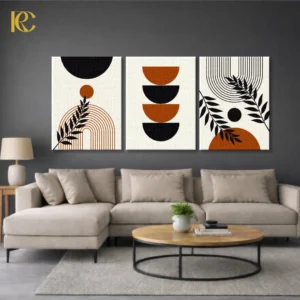
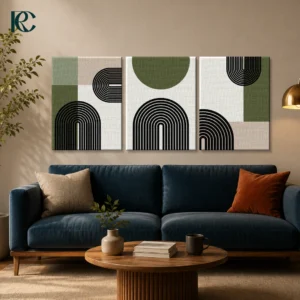
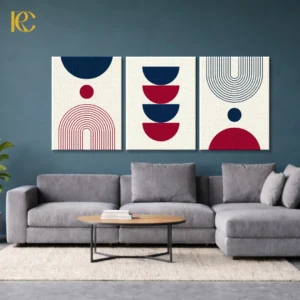
Choose one oversized piece as an anchor, or a triptych/gallery cluster to cover a wide span without overpowering the room.
Pro Tip: In Pakistani homes, the baithak (formal sitting area) often has a long feature wall. A single wide horizontal canvas or a three-panel triptych works beautifully here (it fills the wall with intention rather than clutter).
₨ 10,499–₨ 15,499Price range: ₨ 10,499 through ₨ 15,499Select options
This product has multiple variants. The options may be chosen on the product page
₨ 10,499–₨ 15,499Price range: ₨ 10,499 through ₨ 15,499Select options
This product has multiple variants. The options may be chosen on the product page
₨ 10,499–₨ 15,499Price range: ₨ 10,499 through ₨ 15,499Select options
This product has multiple variants. The options may be chosen on the product page
Match Wall Art Style and Color to Your Pakistani Decor
Style and palette decide whether wall art complements or competes with the room. Pakistani interiors often blend rich textures (ajrak patterns, wooden carved furniture, marble floors, and brass accents), so your art must feel like it belongs, not like it was placed as an afterthought.
Woven hangings, layered botanicals, folk-inspired prints
Japandi-Inspired
Minimal line art, neutral palettes, nature motifs
Color Harmony Rules
Pull one dominant color from the artwork and echo it in rugs, cushions, or ceramics.
Keep the rest neutral (white, beige, warm grey).
If the art has warm tones (terracotta, gold, rust), add warm brass fixtures and wooden accents.
If it leans cool (blues, greens, greys), echo it in ceramics and soft furnishings.
Focus on undertones, not exact color matches , this creates harmony without looking forced.
Pakistani Context Note: Many Pakistani homes feature green or teal walls, dark wood furniture, and marble flooring. Warm-toned art with gold or earthy accents tends to bridge these elements beautifully.
Choose Materials and Finishes That Last in Pakistan’s Climate
This is where Pakistani buyers must be especially careful. Pakistan’s climate (intense sunlight, monsoon humidity, and dust) can degrade low-quality art quickly. Here’s what to look for:
Material Comparison
Material
Best For
Pakistani Climate Consideration
Gallery Canvas
Living rooms, bedrooms
Lightweight, easy to hang; use UV-resistant coating
Framed Paper/Giclée Print
Offices, formal rooms
Needs UV-protective glass; avoid humid walls
Metal Print
Kitchens, bathrooms
Most moisture-resistant; ideal for Karachi humidity
Acrylic Print
Gallery-lit spaces
Glossy and vivid; heavier, needs sturdy anchors
Markers of Quality to Look For
Archival inks or pigment-based printing (often labeled giclée)
UV-resistant coatings or acrylic glazing
Acid-free backing and museum-grade paper or canvas
Natural wood float frames (add warmth and a gallery look)
Fade-resistant inks (critical in Pakistan’s high-UV environment)
Frame Tip: Natural wood frames pair exceptionally well with the warm tones of Pakistani interiors (wood furniture, marble floors, and brass hardware) all complement a wood-framed canvas beautifully.
Budget, Pricing, and Where to Buy Wall Art in Pakistan
Understanding price bands helps you plan without overspending. Here’s a general guide:
Size
Approximate Price Range (PKR)
Small (up to 30×40 cm)
PKR 1,500 – 8,000
Medium (50×70 cm)
PKR 5,000 – 18,000
Large (80×120 cm+)
PKR 12,000 – 60,000+
Prices vary based on print method, framing, and seller.
Where to Buy ?
Royale Canvas: Curated gallery-quality canvas prints framed in natural wood, delivered ready-to-hang with secure nationwide shipping across Pakistan.
Other online shops: you can find large variety of vinyl printed, fiber framed wall arts with nationwide shipping service.
Local art markets (Lahore’s Liberty Market, Karachi’s Clifton): Great for discovering local artists.
Smart Buying Tip: Before ordering online, use measuring tape to map the exact dimensions on your wall. This one step eliminates the most common buying mistake (getting the wrong size).
Hang and Light Your Wall Art Like a Pro
Good hanging and lighting make a piece feel gallery-ready. In Pakistani homes, walls are often concrete or brick, which requires specific hardware.
Step-by-Step Hanging Guide
Measure: Find the wall center and the vertical midpoint of the frame. Mark both lightly with a pencil. Double-check against furniture lines.
Transfer: Measure the distance from the hanging point on the back of the frame to its top edge. Transfer that distance down from your wall mark. Hold the frame up to confirm before drilling.
Mount: For concrete/brick walls (most common in Pakistan), use masonry anchors and a hammer drill or wall steel nail and hammer(more handy option for most). For drywall partitions, use toggle or molly anchors rated for the load. Use a level to confirm alignment.
Lighting Tips for Pakistani Homes
Use warm LED picture lights set to 2700K–3000K with a CRI of 90+ for accurate color rendering.
Angle lights to skim the surface, this makes texture pop and reduces glare on glossy finishes.
Avoid direct sunlight, Pakistan’s intense UV will fade inks and fabrics over time; use curtains or UV-filtering window film if the wall receives direct sun.
In load-shedding situations, battery-powered picture lights are a practical Pakistani-specific solution.
Care and Maintenance
Dust with a soft microfiber cloth regularly (dust is a real issue in Pakistani cities).
Spot-clean frames with a damp cloth and mild soap.
In humid cities like Karachi, use a dehumidifier or avoid hanging art on exterior-facing walls to prevent sagging and mold.
Tighten loose fittings seasonally, temperature swings between summer and winter can loosen hardware.
Quick Selection Checklist
Use this before buying any wall art (online or in person):
What wall and furniture will it sit above? (Measure both)
Does it span 60–75% of the furniture’s width?
Is the center point at 57–60 inches from the floor?
Does the material suit the room’s humidity and light conditions?
Are the inks fade-resistant and UV-protected?
Is the frame style consistent with the room’s décor?
Have I confirmed the return policy?
Have I mapped it on the wall with painter’s tape first?
Room-by-Room Presets for Pakistani Homes
Room
Recommendation
Drawing Room (Baithak)
Single wide canvas or triptych; 60–75% of sofa width
Master Bedroom
Medium horizontal or coordinated pair above bed
Hallway/Corridor
Series of small coordinated pieces to lead the eye
Home Office
One strong vertical or square print; minimal distraction
Dining Room
Single bold statement piece with warm color or texture
Entryway
One impactful piece that sets the tone for the home
Choosing Wall Art That Fits Your Pakistani Home
Choose wall art with intention and the room will feel finished rather than accidental. Prioritize proportion and placement first (a properly sized piece anchors the space), and a well-chosen palette helps the artwork sit as part of the room rather than on top of it.
Materials and framing determine how long your purchase stays beautiful in Pakistan’s demanding climate. Choose prints and finishes that resist fading, handle humidity, and suit the room’s conditions. For a ready-to-hang solution that preserves color and texture through Pakistan’s seasons, gallery-quality canvases framed in natural wood are the most practical and aesthetically versatile choice.
FAQ’s
1. What size wall art is best for a standard Pakistani drawing room?
For a typical Pakistani drawing room with a 6-foot (183 cm) sofa, aim for wall art that is 110–137 cm wide. This follows the 60–75% rule and ensures the piece anchors the seating area without overwhelming it. A single wide canvas or a three-panel triptych works best for the long feature walls common in Pakistani baithaks.
2. How do I protect wall art from fading in Pakistan’s intense sunlight?
Choose prints made with archival, pigment-based (giclée) inks and ensure the piece has a UV-resistant coating or UV-protective glass. Avoid hanging art on walls that receive direct sunlight for extended periods. If unavoidable, install UV-filtering window film or use curtains during peak sun hours. Canvas with a UV-protective varnish is the most practical solution for most Pakistani homes.
3. What type of wall anchors should I use for hanging art on Pakistani concrete walls?
Most walls in Pakistani homes are concrete or brick, not drywall. You’ll need a hammer drill, masonry drill bits, and masonry anchors (rawl plugs). For heavy pieces (over 5 kg), use expansion bolts or a French cleat system. Never use standard drywall anchors on concrete — they will fail and damage both the wall and the artwork.
4. Is it better to buy one large piece or a gallery wall of smaller pieces?
Both work — but for different situations. A single large piece creates a bold focal point and is easier to execute correctly. A gallery wall adds personality and allows you to mix styles, but requires more planning to avoid a cluttered look. For Pakistani homes with ornate furniture and busy patterns, a single statement piece often works better as it gives the eye a place to rest.
5. How do I choose wall art colors that work with green or teal walls common in Pakistani homes?
Green and teal walls are warm-cool hybrids. They pair beautifully with warm-toned art — think terracotta, gold, rust, warm beige, or earthy botanicals. Avoid art with competing cool blues or greens. A warm-toned abstract or a calligraphy piece with gold accents will create harmony. Alternatively, a black-and-white photograph with a natural wood frame works as a neutral anchor against any wall color.